Glycolic Peel for Dark Skin: Safety, Results & Aftercare
A glycolic peel can be a smart option for melanin-rich skin when it is chosen carefully, applied conservatively, and supported by the right before-and-after care. For dark skin, the goal is not aggressive peeling; it is controlled exfoliation that helps brighten uneven tone, soften rough texture, and support clearer-looking skin while lowering the chance of irritation and post-inflammatory hyperpigmentation.
AA
Medically reviewed by Dr. Anna Arsenous, M.D. Updated September 2026 · NY Cosmetic Surgery MedSpa
Why dark skin needs an individualized peel plan
Because darker skin can react to inflammation by making extra pigment, a chemical peel dark skin plan should be individualized. The safest results usually come from a trained provider who understands skin of color, Fitzpatrick IV–VI skin types, and how to adjust peel strength, timing, and aftercare.
Is a glycolic acid peel safe for dark skin?
A glycolic acid peel for dark skin can be safe and effective, but the key word is “controlled.” The American Academy of Dermatology notes that people with skin of color can safely have chemical peels, but they should see a dermatologist with expertise treating darker skin tones because poor technique can lead to lasting pigment problems. (aad.org)
Glycolic acid is an alpha hydroxy acid, often called an AHA. It loosens the bonds between dull, built-up surface cells so the skin can shed more evenly. In dark skin skincare, that matters because uneven cell turnover can make dark marks look more obvious, especially after acne, ingrown hairs, irritation, or sun exposure.
The best candidates are often people dealing with superficial discoloration, dullness, clogged pores, rough texture, and early visible signs of aging. Deeper scars, raised scars, and stubborn melasma may need a broader treatment plan, and a peel alone may not be enough.
What glycolic peel results can you realistically expect?
Glycolic peel results on dark skin are usually gradual: brighter tone, smoother texture, and less visible surface hyperpigmentation over a series of treatments. A pilot study in Black patients found that serial glycolic acid peels provided added benefit for post-inflammatory hyperpigmentation with minimal adverse effects, but results depended on a structured treatment approach rather than a one-time peel. (pubmed.ncbi.nlm.nih.gov)
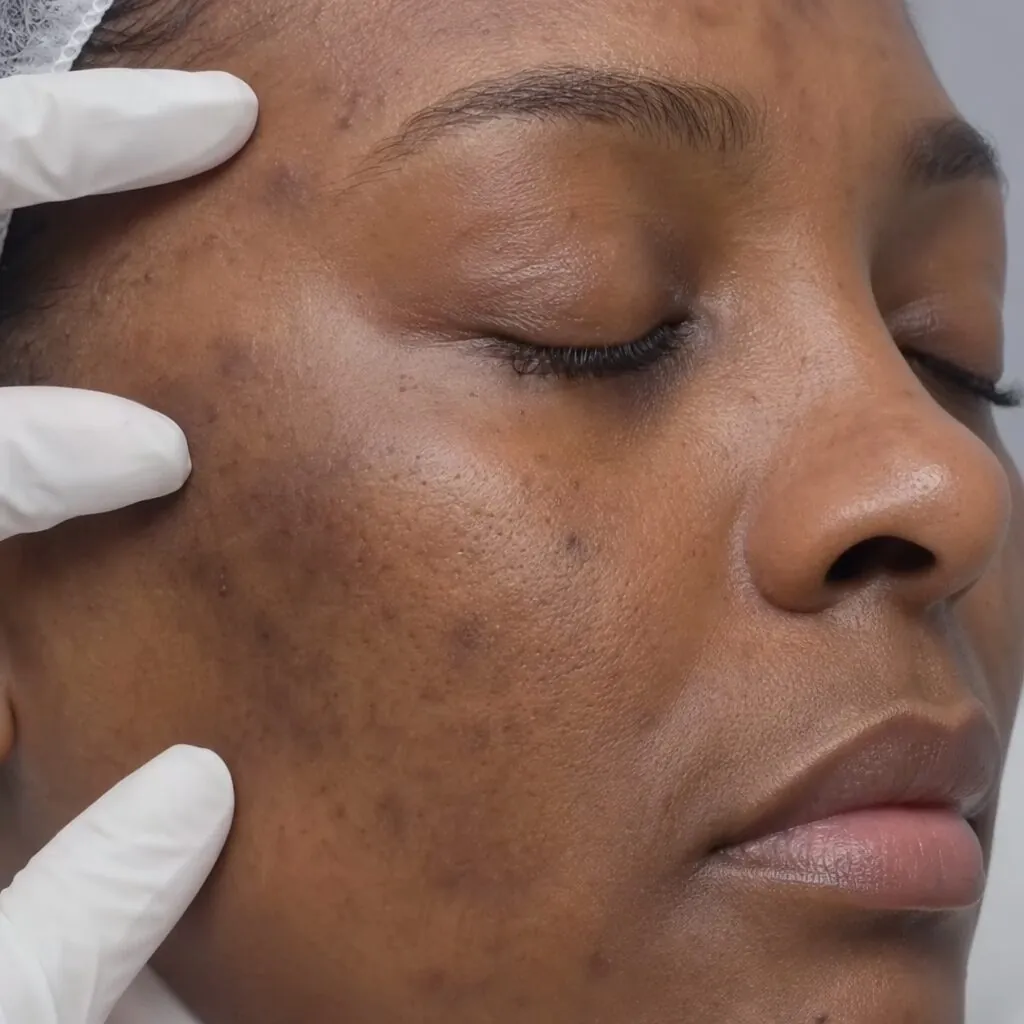
A realistic before-and-after picture may look like this: before treatment, the skin may have scattered brown marks from acne, dullness around the cheeks or forehead, and rough patches that catch makeup. After a properly planned series, the marks may look softer, the skin may reflect light more evenly, and the overall tone may appear fresher. The change is often more “polished and even” than dramatic overnight peeling.
Glycolic peel benefits may include:
Brighter-looking skin: A skin brightening peel can help lift dull surface buildup so natural radiance is easier to see.
More even tone: Superficial dark spots may gradually look less intense as old pigmented cells shed.
Smoother texture: Roughness, congestion, and minor unevenness may improve when exfoliation is consistent.
Support for acne-prone skin: By keeping pores clearer, glycolic acid may support a broader acne-care routine.
Softened fine lines: Surface exfoliation can make very fine lines look less pronounced, especially when paired with daily sunscreen.
The biggest misconception is that visible peeling equals better results. On melanin-rich skin, heavy flaking is not the goal. A gentle peel with minimal downtime can be more appropriate than an aggressive peel that creates unnecessary inflammation.
The “before” phase matters as much as the peel
For glycolic acid dark skin treatments, preparation is not optional. The skin should be calm, hydrated, and protected before a peel is applied. If the skin barrier is already irritated from harsh scrubs, strong retinoids, waxing, over-exfoliation, or active eczema, a peel can push it into inflammation—and inflammation is exactly what can trigger post-inflammatory hyperpigmentation.
Many professionals use a pre-peel routine for several weeks before treatment. This may include daily broad-spectrum sunscreen, gentle cleansing, moisturizer, and carefully selected pigment-regulating or exfoliating products. The exact routine should depend on the person’s skin history, current products, acne activity, and tendency to darken after irritation.
A good pre-peel checklist includes:
Book with a qualified provider. Ask how often they treat darker skin tones and what peel strengths they use for Fitzpatrick IV–VI skin.
Share your full skin history. Mention keloids, cold sores, eczema, isotretinoin use, recent waxing, strong actives, and past reactions.
Pause risky irritation triggers. Your provider may ask you to stop scrubs, waxing, retinoids, or exfoliating acids before treatment.
Commit to sunscreen. UV exposure can worsen dark marks before and after a peel.
Do not peel over inflamed skin. Active rashes, sunburn, open acne lesions, or a damaged barrier should be treated first.
This preparation may feel slow, but it is what makes the “after” phase more predictable. In darker skin, rushing the process can turn a brightening treatment into a pigmentation problem.
Choosing the right peel for melanin-rich skin
Glycolic acid is only one option. The best chemical peel dark skin choice depends on the concern being treated, the skin’s sensitivity, oiliness, acne history, and how easily it pigments. A recent review of noninvasive cosmetic treatments for Fitzpatrick IV–VI skin describes post-inflammatory hyperpigmentation as a major peel-related risk and lists superficial options such as salicylic acid, glycolic acid, and Jessner-type solutions among commonly used first-line approaches. (pmc.ncbi.nlm.nih.gov)
Peel type
Why it may be chosen
Best suited for
Key caution
Glycolic acid
Strong surface exfoliation and brightening support
Dullness, uneven tone, superficial dark marks
Can irritate if too strong or left too long
Mandelic acid
Larger molecule, slower-feeling penetration
Sensitive, acne-prone, or reactive dark skin
Results may be more gradual
Lactic acid
Mild exfoliation with a hydrating feel
Dry, dull, or sensitive skin
Still needs careful timing
Salicylic acid
Oil-soluble exfoliation inside pores
Oily skin, clogged pores, acne-prone skin
Should be used cautiously, especially over large areas
Low-strength TCA
More intensive resurfacing when appropriate
Select scars or pigment concerns under expert care
Higher risk if depth is not tightly controlled
Modified Jessner’s peel
Blended superficial peeling approach
Acne, uneven tone, texture
Not ideal for every sensitive skin type
For many people with dark skin, superficial peels are preferred because they target the upper layers of the skin with less risk than medium or deep peels. Medium-depth and deep peels are generally approached with more caution in skin of color because complications can include discoloration and scarring when penetration is poorly controlled. (cdn.mdedge.com)
How should you care for dark skin after a glycolic peel?
After a glycolic peel, dark skin should be treated like healing skin: keep it calm, moisturized, sun-protected, and free from picking. The “after” routine is where many good peel plans either succeed or fail, because irritation during recovery can lead to the very dark spots the peel was meant to improve.
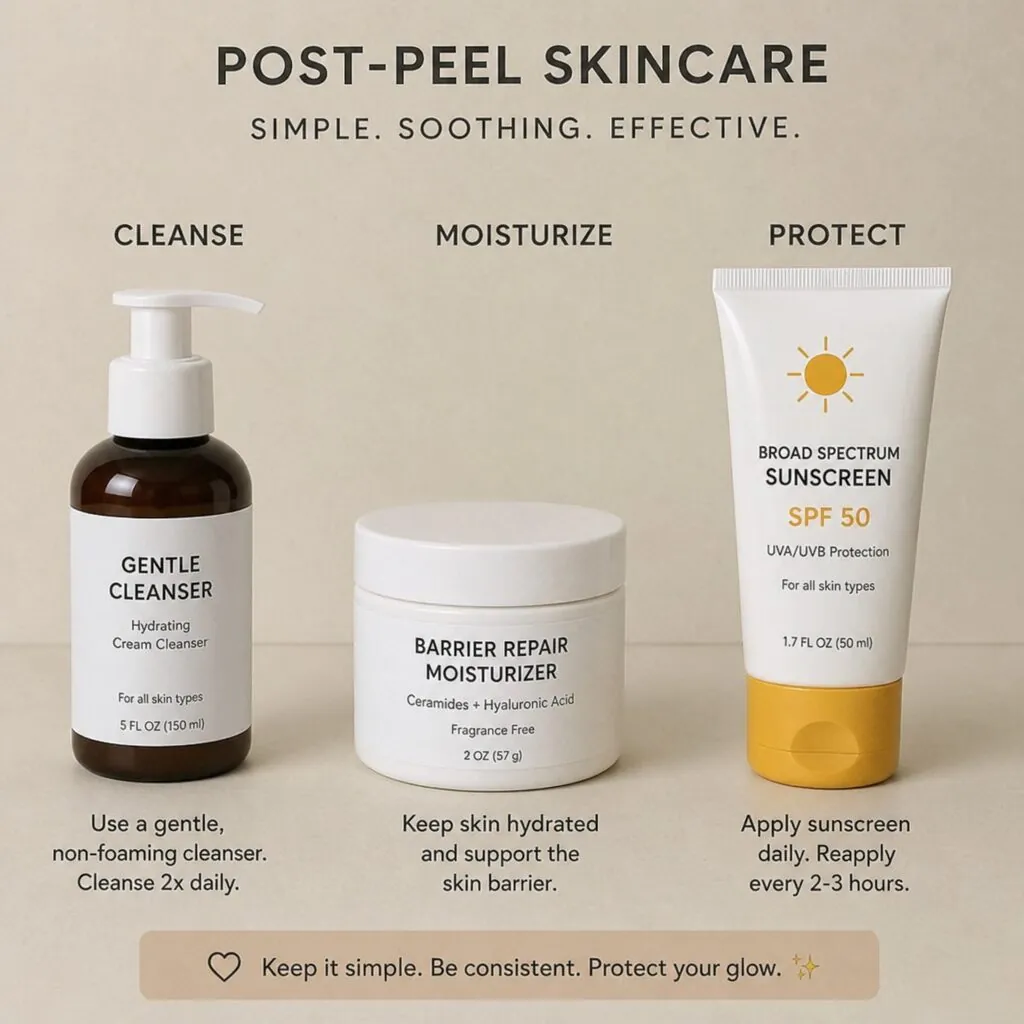
For the first few days, your provider may recommend a bland cleanser, a simple moisturizer, and strict sun protection. Avoid scrubs, exfoliating acids, retinoids, fragranced treatments, and at-home devices until you are cleared to restart them. If the skin flakes, let it shed naturally. Pulling at peeling skin can create tiny injuries that heal darker.
Post-peel care essentials:
Use sunscreen every morning. Reapply when outdoors, sweating, or near strong daylight for long periods.
Keep the routine simple. Cleanser, moisturizer, and sunscreen are often enough during early recovery.
Do not pick or scrub. Flaking is temporary; forced exfoliation can cause marks.
Avoid heat and friction. Saunas, intense workouts, rough towels, and tight masks can increase irritation.
Call your provider if something feels wrong. Increasing pain, swelling, blistering, crusting, or unusual darkening should be addressed quickly.
The AAD also explains that post-inflammatory hyperpigmentation can follow acne, rashes, cuts, and other inflammation, which is why minimizing irritation is central to aftercare for darker skin tones. (aad.org) For a broader look at healing routines, see how to care for your skin after a procedure.
At-home glycolic products are not the same as professional peels
Over-the-counter glycolic toners, serums, and pads can support texture and brightness, but they are not the same as a professional peel. At-home products are generally designed for repeated mild use, while in-office peels use stronger acids, controlled application, and a defined endpoint.
This difference matters for dark skin. Layering multiple exfoliants at home, using high-strength acids without guidance, or copying someone else’s peel routine can cause burns, blotchy tone, or prolonged irritation. If your goal is a visible before-and-after change for hyperpigmentation or acne marks, it is safer to build a plan than to chase faster peeling.
A conservative home routine between professional treatments may include a gentle cleanser, moisturizer, sunscreen, and one well-tolerated active chosen for your skin concern. More products do not always mean better progress. In many cases, consistency and restraint produce a clearer result. Our guide to building a skincare routine that supports your treatments covers the basics.
Signs your provider understands dark skin skincare
The right provider should not treat every face the same. Dark skin skincare requires attention to pigment response, barrier health, inflammation history, and the difference between true scars and flat dark marks.
Look for a provider who:
Explains why a specific peel is being chosen for your skin tone and concern.
Starts conservatively instead of promising dramatic peeling in one visit.
Discusses PIH, scarring, sun protection, and downtime before treatment.
Reviews your current skincare products and tells you what to pause.
Offers a plan for maintenance, not just a single appointment.
Encourages follow-up if you notice unusual darkening or irritation.
Be cautious if someone guarantees flawless skin, recommends a deep peel casually, ignores your history of hyperpigmentation, or says sunscreen is optional. For melanin-rich skin, expertise is not a luxury—it is part of the safety plan.
The clearest takeaway
A glycolic peel can deliver meaningful brightening and smoothing benefits for dark skin, especially when the concern is dullness, superficial hyperpigmentation, uneven texture, or post-acne marks. The safest path is gradual: prepare the skin, choose a superficial peel when appropriate, work with an experienced provider, and protect the skin carefully afterward.
The best before-and-after result is not raw, over-peeled skin. It is calmer, clearer, more even-looking skin that improves without triggering new discoloration. With the right plan, glycolic acid can be a useful part of a thoughtful dark skin skincare routine—not a risky shortcut.
A Note From the Practice
Wondering whether a peel is right for your skin tone? Dr. Arsenous will look at your skin history, pigment response, and goals, and help you choose a conservative plan that brightens without triggering new discoloration.